If you look at who built the last generation of tech companies, the pattern was pretty clear: Stanford, big tech background, strong network, maybe a few years in the Valley. But the next wave won’t follow that script. The new builders don’t always come from elite universities or polished resumes. Many of them start far outside the usual circles.
A lot of early founders still feel pressure to “look serious” by getting an office. But for many startups, especially in the first stages, an office doesn’t add anything. Most teams don’t need a big space to sit in. They need speed, focus, and people who work well together — not a room full of desks.
When you talk to early-stage founders, one pattern appears over and over: the ones who move fast learn faster, adapt faster, and find what works before others even get started. Speed doesn’t mean chaos. It means action. It means taking an idea out of your head and putting it into the real world while everyone else keeps thinking.
A lot of early founders think funding will fix everything. It won’t. Funding only makes the good parts stronger and the weak parts more obvious. The real foundation of a young startup isn’t money. It’s people — the ones who help you think clearly, stay accountable, and make better decisions.
Most early founders waste time and energy without noticing it. They sit alone in apartments, trying to stay motivated, trying to stay focused, trying to figure out everything on their own. Even strong people eventually hit the same problem: isolation makes everything harder. No feedback. No momentum. No energy around you. Just you and a laptop.
Spend enough time on the road, and your brain starts working differently. Moving between countries pushes you to notice how people work, how they solve problems, and where things break. You spot slow processes, outdated tools, strange systems, and clear gaps in the market. These small observations stack up and shape how you think.
The idea of freedom is everywhere: work from anywhere, travel when you want, no boss, no fixed schedule. It sounds ideal. And it is great — but it also comes with responsibilities most people don’t think about.
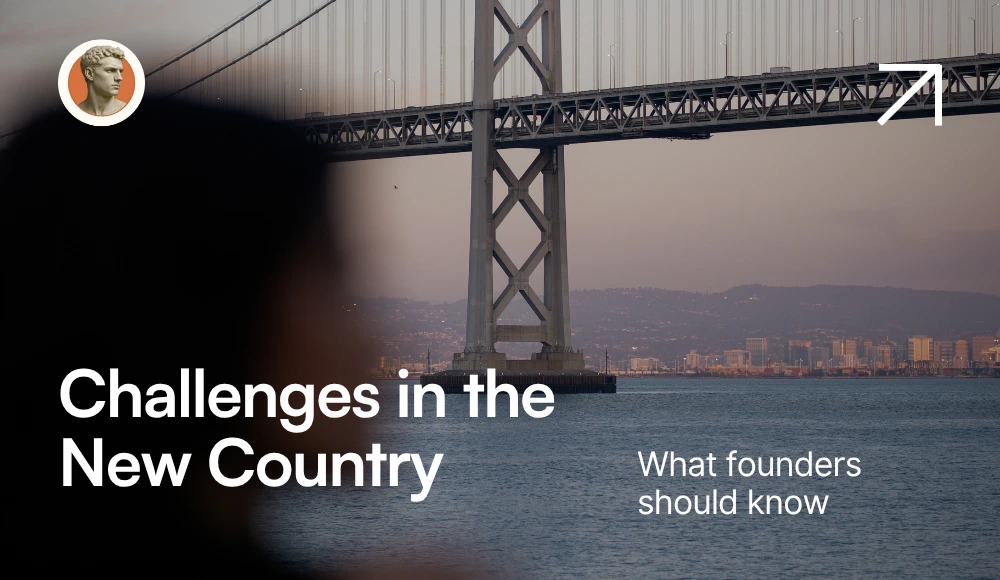
San Francisco attracts huge numbers of founders and builders every year. Some arrive because they’re ready to build. Others come because it seems like the “smart move.” People in the second group usually leave quickly. The city makes it obvious who is serious and who isn’t.
Early-stage building creates constant pressure. There’s always another decision waiting, another message, another issue, another idea that needs attention. It doesn’t come all at once — it builds gradually. You think you’re fine until your mind suddenly feels slower, heavier, or more scattered than usual. Mental overload isn’t a dramatic moment — it’s a gradual shift in how you think.
Long work sessions create the illusion of productivity, but sitting still for hours often slows the mind. Thoughts get tangled. Decisions feel heavier. Problems look bigger than they are. Movement breaks that pattern. Even a short walk changes how the brain processes information — ideas become lighter, connections appear faster, and decisions feel less overwhelming.
Founders often blame themselves for drifting or losing concentration, even though the real cause is usually the environment. A quiet room is helpful, but a room where people are actually getting things done creates a different level of clarity. When you’re surrounded by steady movement, your mind settles faster. You don’t need to force discipline — the environment carries part of the weight for you.
Founders often feel like they have to choose between two modes: calm or speed. In reality, momentum becomes sustainable only when the mind is steady. When you’re overwhelmed, every task feels heavier. When you’re calm, you can move quickly without burning through your energy. The balance isn’t about slowing down — it’s about removing the mental friction that breaks your pace.
Founders often underestimate how much their environment shapes their thinking. A short trip through California can give you a surprising amount of clarity. Not because it’s a “beautiful state” — though it is — but because each place has a different energy, a different rhythm, and a different kind of conversation. These shifts help you see your work from new angles without forcing anything.
Founders often treat distractions as the enemy — something that steals focus and slows progress. But early-stage work isn’t a straight line. Sometimes the thing that breaks your routine gives you a new angle, a better idea, or clarity you didn’t expect. Not all interruptions are harmful — a few of them reveal information you would’ve missed by staying locked inside the same workflow.
When you spend time in California — especially in San Francisco — your perception of what’s “big” shifts. People discuss ambitious ideas calmly, without treating them as unrealistic. A large goal stops looking like a fantasy and starts looking like a real project. The conversations here make scale feel workable rather than intimidating.
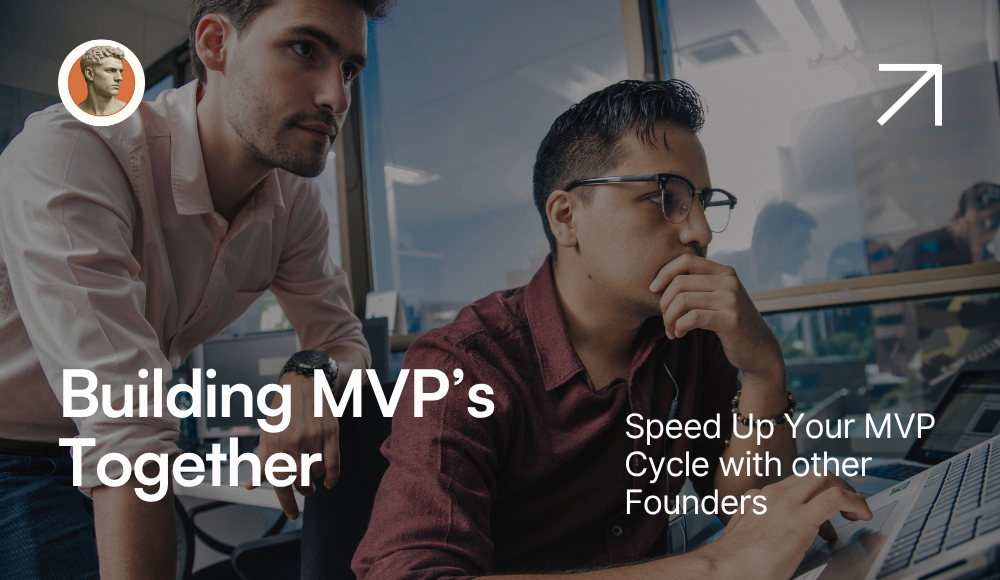
Most founders spend too much time perfecting something nobody has seen yet. They plan features, polish designs, rewrite documents, and stretch the build into weeks or even months. The problem is simple: every hour spent polishing an untested idea is a bet placed blindly. An MVP exists for one purpose — to test whether anyone cares.
Early-stage founders often imagine that progress happens during formal meetings or structured feedback sessions. But most of the important breakthroughs happen in simple, relaxed conversations — the kind where you’re not performing, not pitching, and not trying to impress anyone. When you explain your idea casually, the real shape of the product becomes visible.
When a founder thinks about an idea long enough, it starts to feel perfectly logical. The story fits together in your head. The solution makes sense on paper. You can imagine the user, the problem, and the value clearly. But ideas don’t live in your mind — they live in the real world. And the real world rarely behaves the way founders expect.
If your MVP requires a long story, a detailed deck, or a step-by-step walkthrough to make sense, the idea isn’t ready yet. Early products should be simple enough to describe in a normal conversation — the kind you could have while making coffee or eating breakfast with someone. When an idea is clear in your mind, it comes out naturally.
A lot of founders try to force motivation. They push themselves with discipline, heavy routines, or productivity tricks, hoping the energy will appear. In reality, motivation is usually a signal. When it’s consistently low, it often means the idea doesn’t connect with you deeply enough. You don’t need to be obsessed, but you need to feel something real — a pull toward the problem you want to solve.
Founders often hear advice from people who have no real connection to the problem they’re trying to solve. Friends want to be supportive. Random users focus on small details. People outside the industry guess instead of drawing from experience. This creates noise, not clarity — qualified feedback comes from people who understand the problem.
At the pre-seed stage, almost nothing is fully formed. The product is early, the market is untested, the pitch changes weekly, and the team is still small. Because of that, investors can’t rely on traditional metrics. They look at something simpler and far more telling: how consistently the founder pushes the project forward.
Founders carry a level of pressure that doesn’t match the size of their team. It comes from uncertainty, constant decision-making, responsibility for the product, responsibility for the team, financial worry, and the feeling that everything depends on them. Most of this stress doesn’t show up dramatically — it grows slowly while the founder keeps moving.
After meeting more than a hundred founders, one thing becomes obvious: the successful ones don’t fit a single mold. Some come from engineering backgrounds, others come from design, operations, marketing, or completely unrelated fields. What matters isn’t the background — it’s how they behave once they start building.
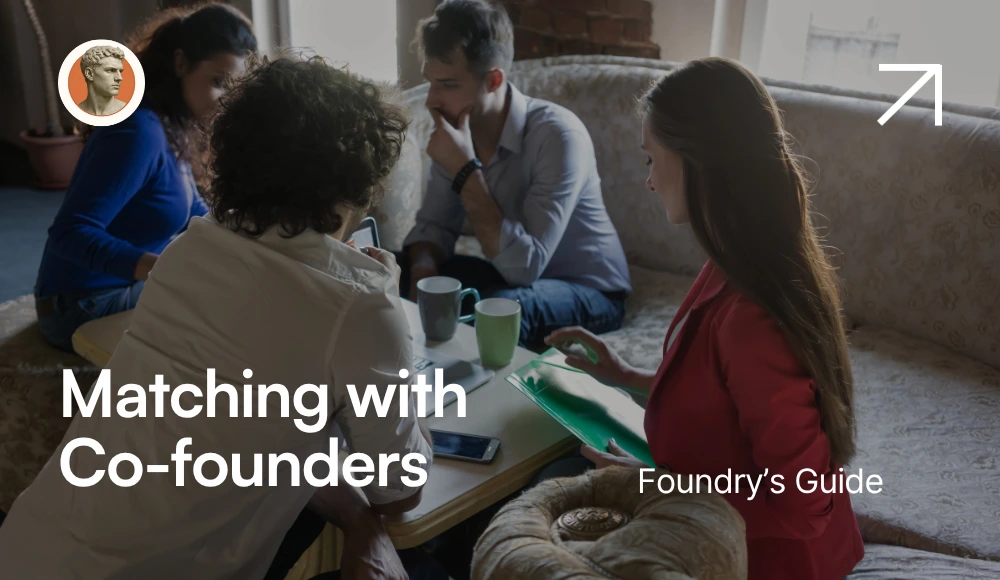
When two people decide to build together, they become the core engine of the company. Their habits, values, speed, and communication style set the tone for everything that happens after — product decisions, hiring, execution, and even the culture. Choosing a co-founder isn’t just a strategic move. It’s a long-term commitment that affects every part of your startup.
Look at your daily life. The people you talk to, the conversations you have, the topics that come up — all of it influences how you think. If your circle doesn’t challenge you or make you want more, your goals slowly shrink without you noticing.
When you switch countries, your brain stops running on autopilot. You question habits, patterns, and assumptions you didn’t even realize you had. Different cultures show different solutions, and seeing them firsthand upgrades how you make decisions.
Founders who consistently experience “lucky moments” usually follow similar habits, even if they don’t label them as strategies. They spend time in places where ambitious people gather, they stay active in conversations, and they share what they’re working on. When you repeat these behaviors long enough, opportunities start appearing more regularly.
When a problem bothers you on a personal level, your mind naturally goes deeper than everyone else’s. You start seeing patterns. You recognize edge cases. You notice things that don’t show up in surveys or spreadsheets. The people who build unicorns usually didn’t pick a market for strategic reasons — they felt something with enough intensity that ignoring it became impossible.
Cities have their own rhythm. Some move slow. Some move fast. Some push you to think bigger, others make you feel like you’re already doing enough. Your mind adapts to whatever is around you.
Global companies rarely start in big offices or large teams. They start in small circles: a few people who think the same way, push each other, and stay focused. A tight group makes you sharper, forces better decisions, and helps you spot opportunities you’d miss alone.
San Francisco remains one of the most active hubs for angel investing in the world. With a concentration of early-stage investors, accelerators, and startup founders, the opportunities to raise seed capital are unmatched if you know how to position yourself. Here's how to find the right angel investors, make a strong pitch, and secure funding for your startup.
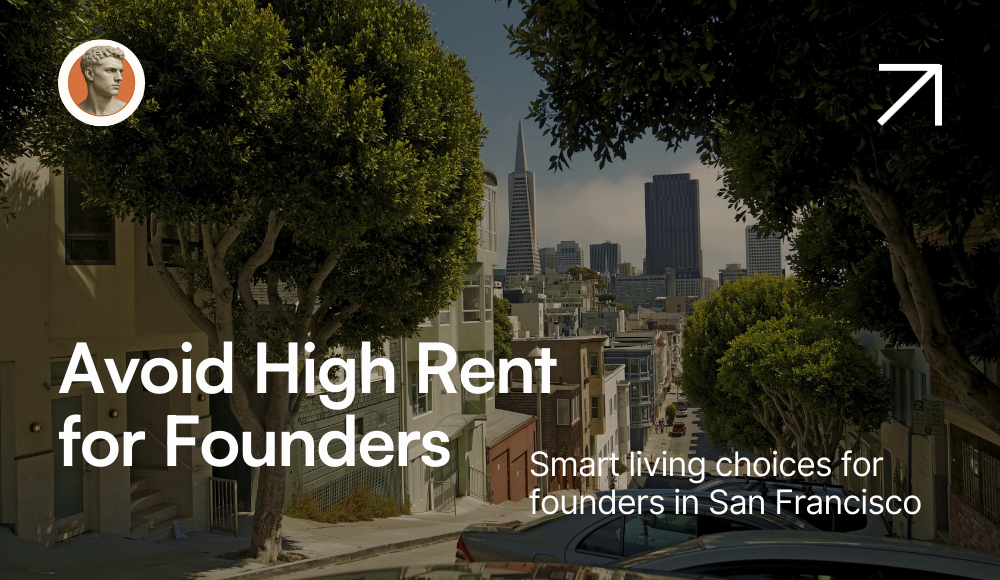
San Francisco has been the heart of the startup world for decades. Even with rising San Francisco rent and the competitive pace of life, it remains one of the best places on the planet to build and grow a company. The density of talent, capital, and innovation is unmatched, and the city's network-driven culture makes it a natural fit for founders who want to accelerate their journey.
Launching a startup in San Francisco comes with both opportunity and cost. One of the biggest challenges is balancing high expenses with the need to scale quickly. Here's a streamlined guide to help you anticipate startup costs—and how Foundry's coliving gives you a built-in edge.
Traveling Makes the Search Harder When you move between cities, familiarity disappears. The routines you rely on break, the people you know are far away, and you can’t depend on [...]
Paradise Feels Amazing Living in a beautiful place lifts your mood easily. Warm weather, long days, relaxed people — it all feels good. But this comfort also makes it easy [...]
The people you share your environment with shape your habits, mindset, and self-awareness. When those people are founders and high-performance leaders, your development accelerates naturally. A coliving space full of [...]
Traveling does more for founders than offering a break from routine. When you move between countries, you see how people solve problems in ways that don’t exist where you came [...]
In a world obsessed with automation, funnels, and digital reach, it’s easy to assume everything important can be scaled online — conversations, communities, even trust. But for founders, nothing replaces [...]
Building a company puts you into a form of isolation few people recognize. You may be surrounded by teammates, friends, and a buzzing ecosystem — yet still feel like no [...]
Being a digital nomad is thrilling — new cities, new faces, new stories every few months. But for founders, there’s a moment when constant movement stops being energizing and starts [...]
Moving to San Francisco to build a startup without outside capital takes discipline, intentional choices, and absolute clarity on your runway. The city rewards bold execution — but it punishes [...]
SF investors sit through countless pitches every week. They’ve heard everything — from founders with a sketch on a napkin to unicorn CEOs raising their next round. There’s no perfect [...]
Coliving has already woven itself into the startup world — a hybrid of living, building, and collaborating under one roof. But by 2026, this model will mature into something far [...]
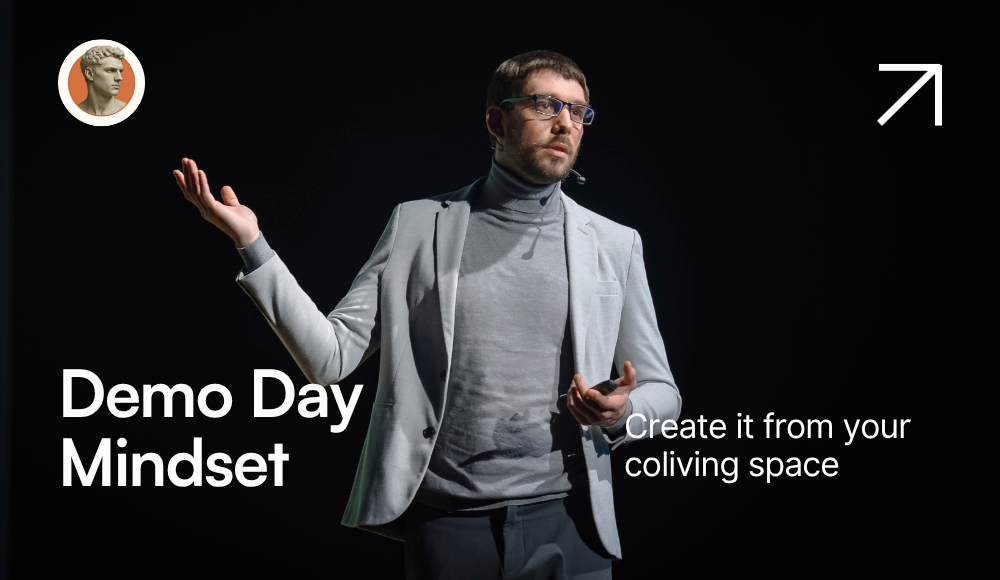
A powerful Demo Day moment isn’t created the night before. It grows from clarity, momentum, and steady confidence — qualities shaped through consistent daily practice. When you live alongside other [...]
You already understand the value of iterating fast. But iteration isn’t powered only by sprints, features, or user interviews — it’s shaped by your environment. The people in your orbit, [...]
The first weeks in a new startup city often feel like watching a movie you weren’t invited to. Everyone seems connected already — shipping fast, meeting investors, joining groups you [...]
San Francisco is a mosaic of neighborhoods, each with its own rhythm, advantages, and gaps. For a founder, choosing the right place to live can change the way you think, [...]
What No One Warns You About The housing hunt hits hard: the city looks promising, but every listing turns into an auction, even for a shared room, and you don’t [...]
You want a partner who backs your ideas, keeps the vision alive, and builds together. In a environment like Foundry, you might find the right partner while living the culture. [...]
Not every meeting calls for a quick team check-in over coffee. Sometimes the setting itself becomes part of the message – showing taste, attention to detail, and an understanding of [...]
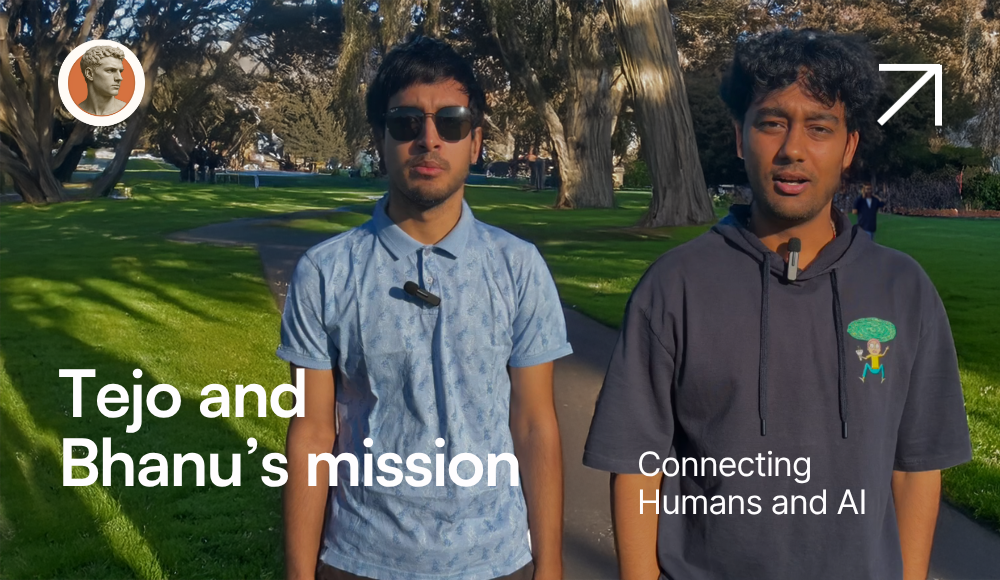
What if your favorite social media feed was filled not just with friends – but with Einstein, Nietzsche, and Churchill, all posting about modern life? That’s the world Tejo and [...]
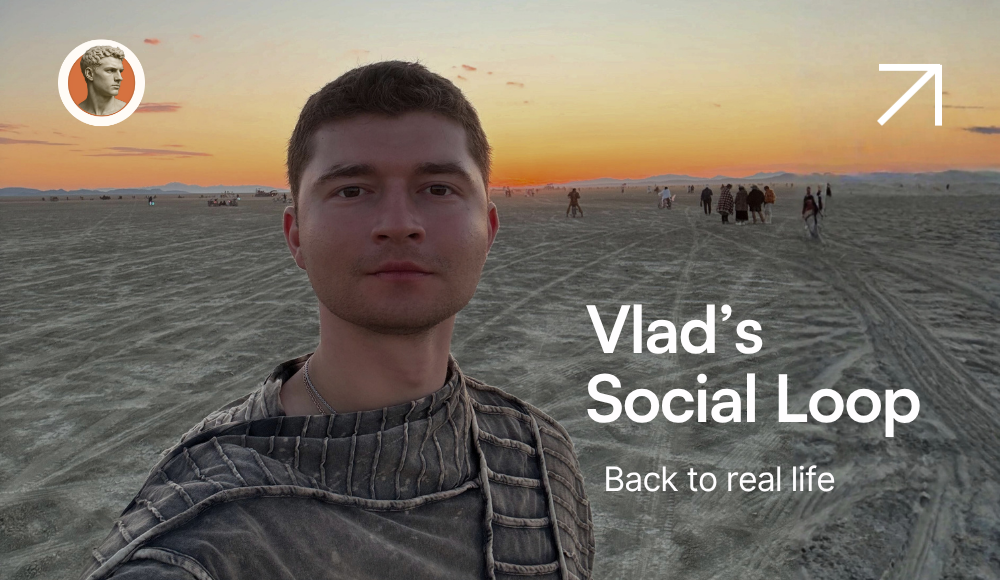
Endless scrolling. Likes without meaning. Contacts that disappear as quickly as they appear. Vlad looked at today’s social networks and saw emptiness. Platforms promised connection but delivered loneliness. “You cannot [...]
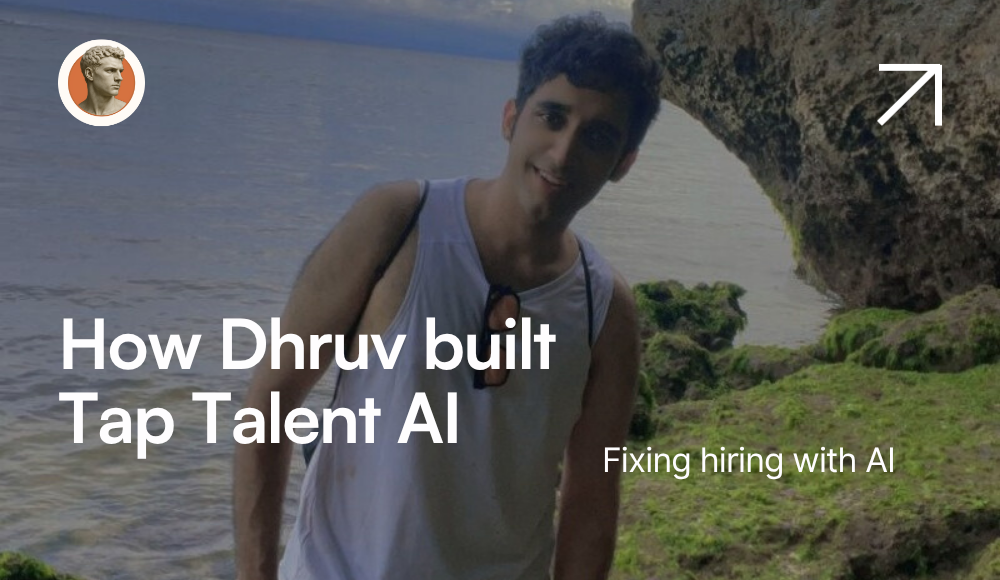
Sometimes hiring seems broken. It’s slow, expensive, and often disappointing – even for big companies with deep pockets. Dhruv Bhagat saw this firsthand while working at a fashion-tech platform in [...]
Most social platforms connect you to endless streams of strangers and influencers. Likes and comments don’t create closeness. Group chats, the closest tool for friends and family, are often chaotic [...]
San Francisco is known for its tech and startups, but the city’s art is just as important for anyone who wants to think differently. Museums, theaters, installations, and the Philharmonia [...]
Every founder begins with ambition. But ambition alone doesn’t build companies. What truly shapes the trajectory of a founder is the environment – the people, spaces, and daily rhythms that [...]
San Francisco is a city of possibilities. Every day offers new events, partnerships, coffee invites, and “must-attend” gatherings. For a startup founder, it’s easy to believe that saying yes to [...]
San Francisco can be a powerful launchpad for startups — but it’s also one of the most expensive and competitive places to build. For founders, the clock starts ticking the [...]
Raising capital in San Francisco is tough enough without losing precious months to problems you didn’t see coming. Many early-stage founders blame burn rates on rent or salaries, but the [...]
San Francisco rent puts pressure on every seed-stage budget. The goal is not to outspend the city. It is to choose a setup that protects runway, shortens commutes, and keeps [...]
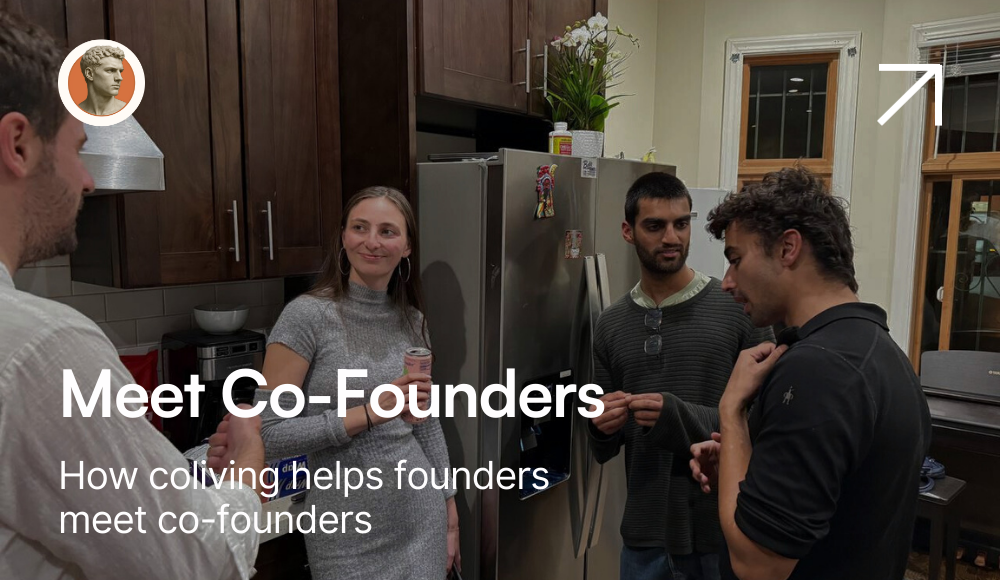
Finding a cofounder in San Francisco is less about chance and more about repeated, high-quality collisions with people who build at your pace. Coliving San Francisco compresses that search. You [...]
Both coasts deliver talent and customers. In 2025 the question is where a founder gets faster momentum on the same dollar of runway. Capital and founder density California still leads [...]
San Francisco rewards speed. Fundraising cycles, customer intros, and product launches happen quickly. That pace is exciting, but it can drain founders who try to do everything alone. Burnout in [...]
Every founder arrives in San Francisco with an idea. Some are polished, others are half-baked, but all face the same question: does anyone actually want this? Validation in SF is less about theory and more about speed. The density of talent, capital, and customers means you can know in days what would take months elsewhere.
Let’s get started
We will give you an online tour in the house and answer all your questions!
Thank you for your application!
We will be in touch soon.
Want to skip the queue?
We have a waitlist of around 30 people. Filling out your full profile takes ~2 minutes and bumps you to the top — applicants with a complete profile get a response first.

Fill out my profile →